An independent flavor journal Vol. 04

The Autumn Issue November 2026 Tallinn, Estonia

The Autumn Issue No. 04

The bright, brittle architecture of hard candy.

A flavor journal about boiled sugar: the classics worth returning to, the stages that shape them, and the combinations that reward a second taste.

Words & tasting notes Almanac editorial desk

November 2026 9 minute read

An assortment of translucent amber, raspberry, cream, and green hard candies and lollipops arranged on parchment over dark plum linen.
Amber, raspberry & cream dropsFig. 01
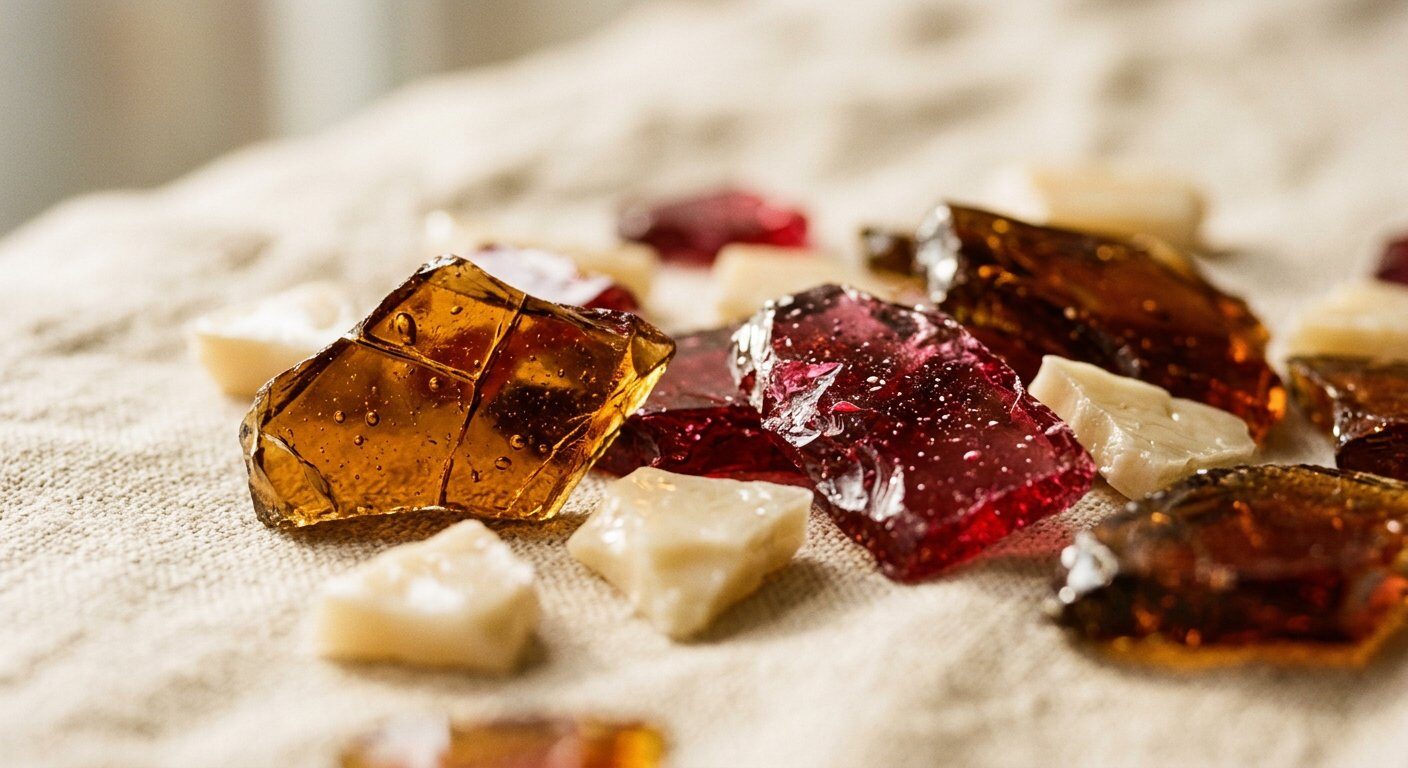
Close-up of broken hard candy shards in amber, ruby, and cream, showing glassy fractured surfaces.
Citruszest, oil, acid
Berryfruit, rose, almond
Spiceanise, pepper, clove
Botanicalviolet, honey, hay
Creambutter, malt, salt
Roastcoffee, cocoa, smoke

The catalog

Seven confections, one glassy finish.

Each entry is arranged by the note that leads. These are starting points for tasting, not rules: aroma first, then texture, then the finish that stays behind.

Showing all seven confections.

Golden translucent lemon drops with fresh lemon zest on a cream ceramic plate. 01 Citrus

Lemon drop, with black pepper

A clean citric drop that borrows a little heat from cracked pepper.

Aroma
Lemon oil, fresh zest, a faint peppery lift.
Finish
Clean and short, with a warm tingle at the back of the throat.
Bright
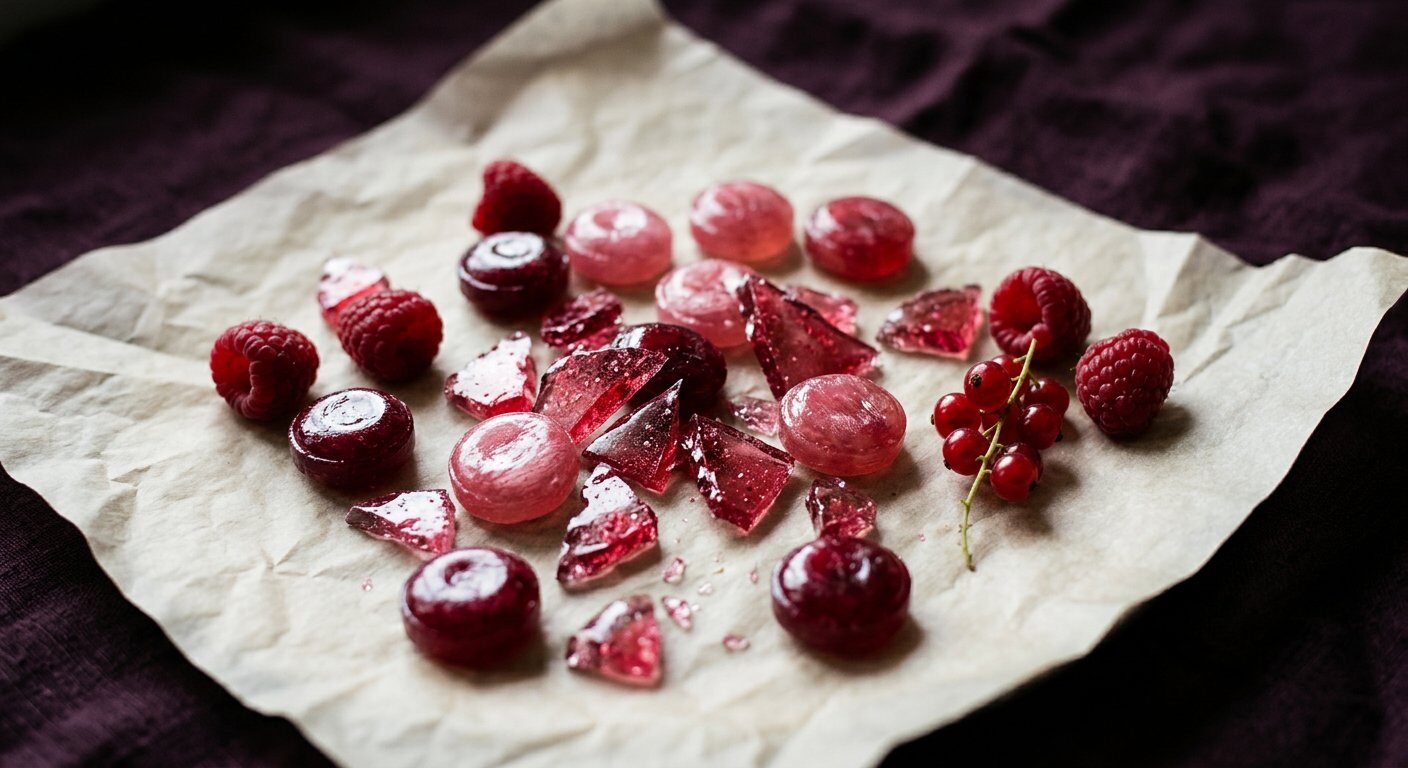
Deep ruby and rose-pink translucent berry hard candies with fresh raspberries and red currant. 02 Berry

Raspberry & rose

Sharp fruit softened by a floral note that reads as perfume, not soap.

Aroma
Crushed raspberry, rose petal, a little green stem.
Finish
Soft floral, with the fruit returning at the end.
Delicate
Deep crimson sour cherry hard candies with fresh cherries and sliced almonds on cream parchment. 03 Berry

Sour cherry & almond

A tart cherry shell with the bitter-sweet echo of almond at the finish.

Aroma
Sour cherry, marzipan, a hint of bitter peel.
Finish
Dry and faintly bitter, like the inside of a cherry stone.
Assertive
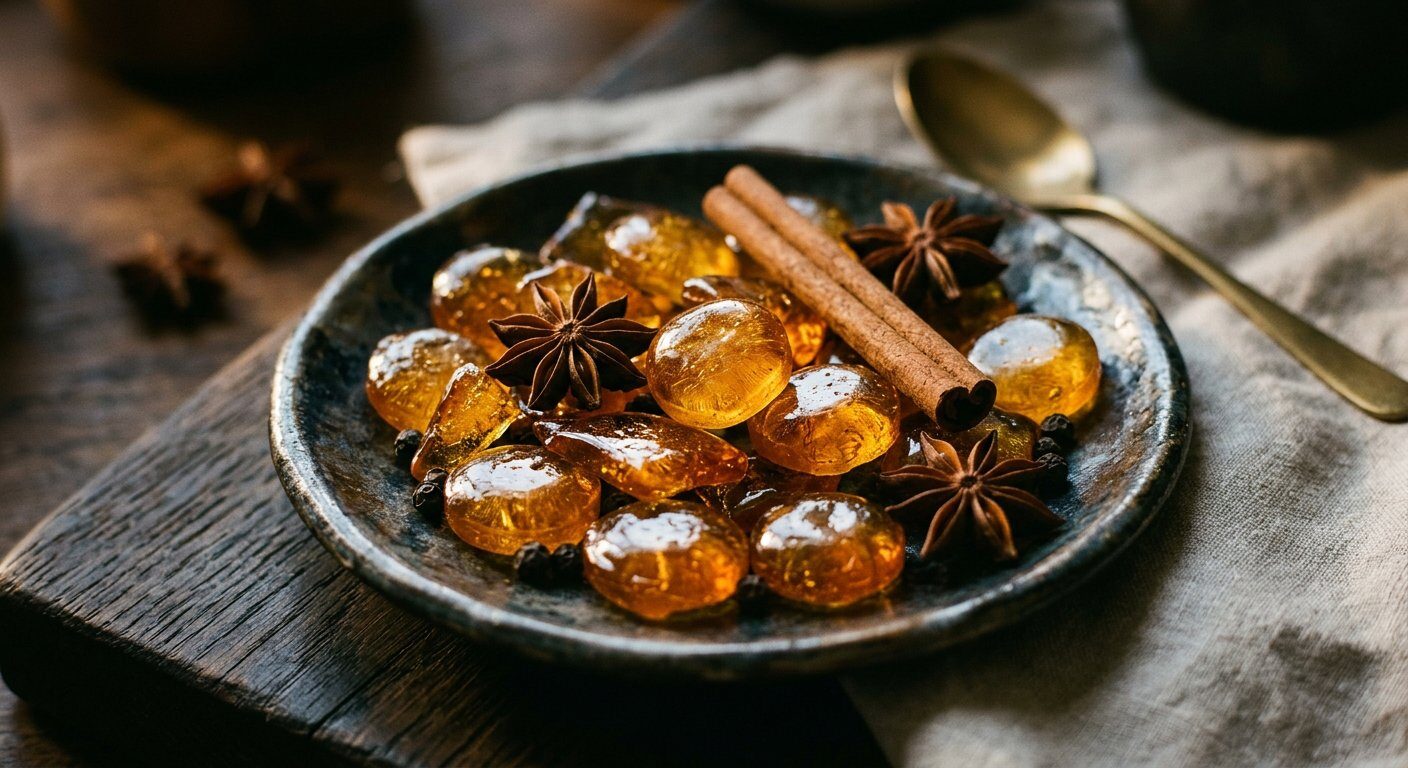
Amber translucent spice hard candies with star anise, a cinnamon stick, and black peppercorns. 04 Spice

Anise & burnt orange

Licorice and orange peel, both taken to the edge of bitter.

Aroma
Star anise, orange oil, a wisp of smoke.
Finish
Long, warm, and more savory than sweet.
Assertive
Pale lilac and violet translucent hard candies with dried violet petals and lavender on a cream plate. 05 Botanical

Violet & honey

A soft floral drop, kept from fading by a rounded honey sweetness.

Aroma
Violet, honey, a little hay.
Finish
Muted and lingering, like a dried flower.
Delicate
Golden butterscotch and cream hard candies with a small dish of flaky sea salt. 06 Cream

Butterscotch & sea salt

Cooked cream and malt, interrupted by flakes of salt.

Aroma
Butter, malt, caramel, a mineral edge.
Finish
Long and rounded, with a savory mineral close.
Rounded
Coffee and cream hard candies in milky beige and coffee brown, with whole coffee beans and flaky salt. 07 Roast

Coffee & cream

A milky coffee drop with a bitter roast edge and a saline finish.

Aroma
Fresh coffee, cream, a little cocoa.
Finish
Dry, warm, and lightly saline.
Assertive

The tasting ledger

A table is only the beginning of the argument.

A hard candy is a small lesson in patience: the sugar tells you when it is ready, and the flavor tells you when to stop.

From the Almanac tasting notes

Use this table as a vocabulary, not a scorecard. The same confection can taste different on a cold morning, after coffee, or at the end of a long meal. The descriptors below are meant to be argued with.

Classic confections and their leading notes
Confection Dominant note Supporting notes Texture Pairs with
Peppermint drop Cool menthol Sugar, vanilla Glassy, slow dissolve Dark chocolate
Lemon drop Citric brightness Lemon oil, black pepper Thin, brittle Black tea
Anise comfit Licorice Fennel, burnt orange Dense, slow Espresso
Butterscotch Cooked cream Malt, sea salt Smooth, chewy center Coffee
Violet pastille Floral powder Honey, lemon Soft, chalky Sparkling water
Sour cherry Sharp fruit Almond, citric acid Crackly shell Cream
Coffee cream Roast Cocoa, salt Milky, glassy Biscotti

From the kitchen notebook

Three ways to build a flavor.

Small-batch recipes for the home kitchen, written around a single idea: let one note lead and give the others room. Each includes a tasting note and a practical warning.

Lemon & black pepper drops

A clean, hard-crack drop with a dry peppery finish.

  • YieldAbout 24 drops
  • Time35 minutes, plus cooling
  • Cook to150°C / 302°F

Ingredients

  • 300 g granulated sugar
  • 120 ml water
  • 80 g glucose syrup
  • 1 tsp lemon oil, or 2 tsp finely grated zest
  • ½ tsp citric acid, dissolved in 1 tsp water
  • ¼ tsp freshly cracked black pepper
  • A pinch of fine sea salt

Method

  1. Line a rimmed tray with parchment and dust it lightly with cornstarch. Set a heatproof spatula and a small bowl of cold water nearby.
  2. Combine the sugar, water, and glucose in a heavy saucepan. Heat over medium, stirring only until the sugar dissolves, then leave the pan alone.
  3. Clip on a thermometer and cook to 150°C. Brush down the sides with a wet pastry brush if crystals form.
  4. Remove from the heat and let the bubbles settle for 20 seconds. Stir in the lemon oil, citric acid mixture, pepper, and salt. The syrup will hiss and darken.
  5. Pour onto the prepared tray in a thin, even layer. Leave it undisturbed until cool enough to handle, about 20 minutes.
  6. Score the sheet into small squares, then break along the lines. Store between parchment in an airtight tin.

Tasting note

Bright, clean, and just warm enough at the end. The pepper should be a whisper, not a challenge.

Kitchen note

Hot sugar causes serious burns. Keep children and pets away, use a deep heavy pan, and never taste the syrup until it has cooled on the tray.

The craft, briefly

Sugar, in four movements.

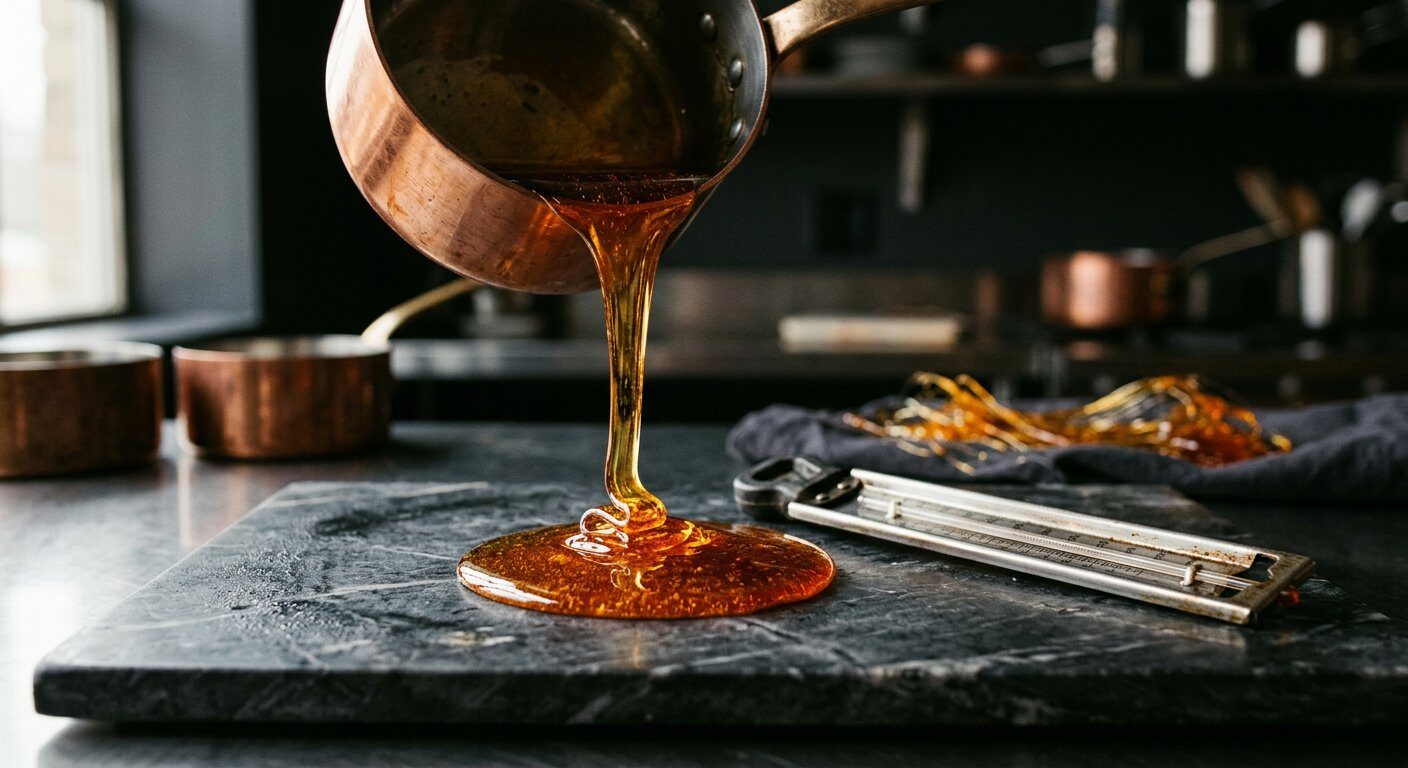
Hard candy is mostly a study in temperature and restraint. The sugar does the work; the cook decides when to stop stirring, when to add flavor, and when to leave it alone.

Amber molten sugar poured from a small copper pan onto a dark marble slab, with a candy thermometer nearby.
Amber syrup at the hard-crack stageFig. 02
  1. Dissolve

    Sugar, water, and glucose go into a heavy pan. Stir only until the sugar disappears; after that, leave it alone.

  2. Cook to stage

    The temperature decides the texture. Thread, ball, and crack stages are not interchangeable; a few degrees can move a candy from chewy to brittle.

  3. Flavor off the heat

    Oils and acids are volatile. Add them after the pan leaves the burner, and expect the mixture to hiss and darken.

  4. Cure and keep

    Candy needs time to equalize. Cool it completely, cut it once it is firm, and store it between parchment in a sealed tin.

A short guide to sugar stages

Approximate temperatures for a home kitchen. Calibrate your thermometer and adjust for altitude.

110–112°C

Thread

A thin thread spins from the spoon. Used for syrups and some glazes.

112–116°C

Soft ball

A soft, pliable ball forms in cold water. The texture of a soft caramel.

118–120°C

Firm ball

A firm ball that holds its shape. Good for chewy candies.

121–130°C

Hard ball

A hard, sticky ball. Nougat and some gummies.

132–143°C

Soft crack

Threads that bend before they break. Chewy caramels and toffees.

146–154°C

Hard crack

Brittle threads that snap. Hard candy and lollipops.

A note on safety. Hot sugar is serious. Use a deep, heavy pan, a reliable thermometer, and a clear workspace. Keep children and pets at a distance, and do not taste the syrup until it has cooled.

The pairing index

Flavor is a conversation, not a list.

Pair by intensity before you pair by category. A delicate violet drop will disappear beside a dark coffee candy; a sharp cherry can hold its own.

  1. 01 Lemon Black pepper The citrus lifts; the pepper keeps it from turning sweet.
  2. 02 Raspberry Rose Floral notes read as perfume when the fruit is sharp enough.
  3. 03 Anise Burnt orange Two bittersweet edges meet in the middle.
  4. 04 Butterscotch Flaky salt Salt interrupts the cooked-cream sweetness.
  5. 05 Violet Honey A soft floral note needs a rounded sweetener.
  6. 06 Sour cherry Almond The pit note in almond echoes the fruit's tartness.
  7. 07 Coffee Cream Roast and dairy are a classic pair; a little salt sharpens both.

The dispatch

A short letter about sugar, now and then.

Occasional notes on flavor tests, seasonal ingredients, and the tasting tables we keep. No schedules, no noise, and no sharing of your address.

  • One note when there is something worth saying.
  • Recipes and tasting notes from the journal.
  • A demonstration form; nothing is sent or saved.

A demonstration form. Enter an address to see the confirmation.

This demonstration form validates your address in the browser and shows a confirmation here. Nothing is sent or stored on a server. Read the privacy notice.

Citrus

Lemon drop, with black pepper

Tasting note 01 Hard Candy Almanac